So, it was too windy to dock in Edinburgh so this time the Captain didn’t even try. We docked in Rosyth instead, which was about 30 min by car from Edinburgh. By the time we (Shane) got up, it was too late to go there before our tour, which just means that I’m going to have to come back to actually see the Royal Mile and the castle and all that. Sounds like a plan for a future trip. But it turned out to be sunny, and 70 today, so I can’t complain about that.
So as we came into the estuary beside Edinburgh this morning, I made these videos of us going under the Forth Bridge. The estuary, called the Firth of Forth, is the river mouth that sits on the northern edge of Edinburgh, connecting the city to the North Sea. The Forth Bridge is a cantilever railway bridge across the Firth of Forth in the east of Scotland, 9 miles west of central Edinburgh. Completed in 1890, it is considered a symbol of Scotland (having been voted Scotland’s greatest man-made wonder in 2016), and is a UNESCO World Heritage Site.
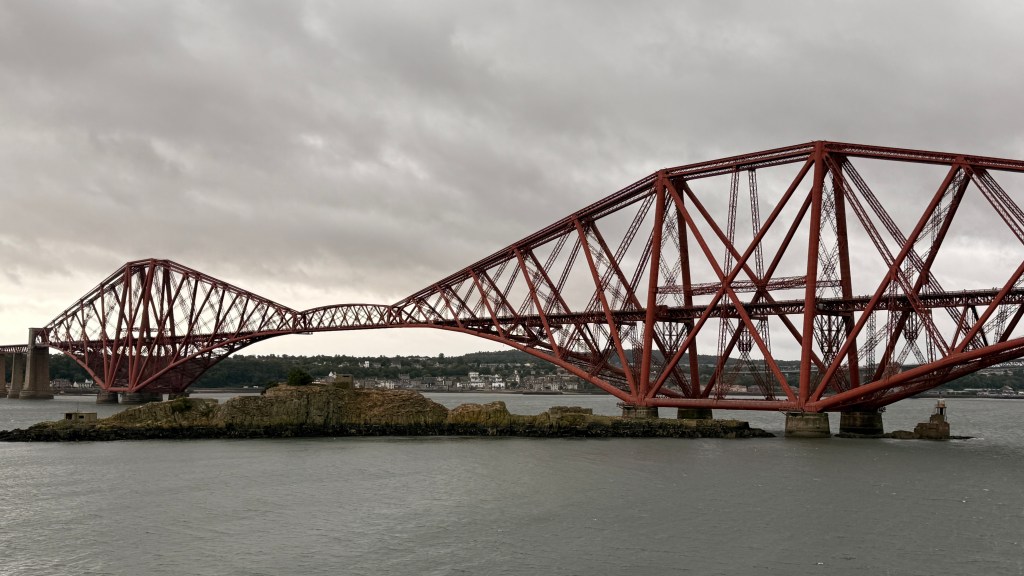
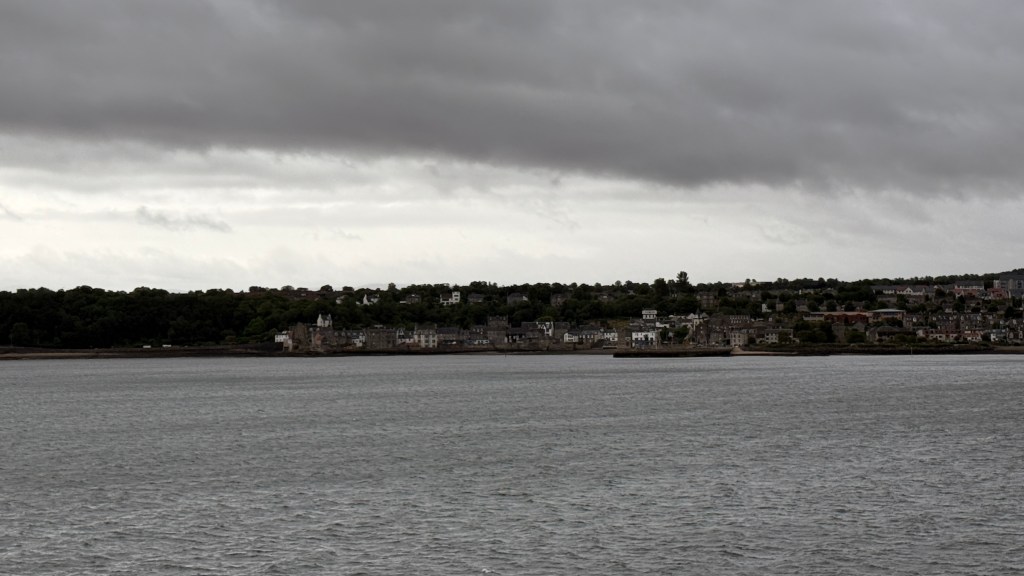
As you can see, the day started very overcast, and it was raining a little. They actually gave out plastic ponchos for everyone as you went down the gangway, just in case.
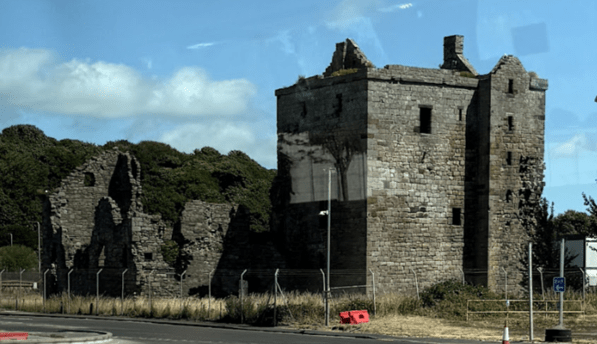
As we were pulling out of the port, just hanging out on the side of the road, was the Rosyth Castle, which is a fifteenth-century ruined tower house on the perimeter of Rosyth Naval Dockyard. It originally stood on a small island in the Firth of Forth accessible only at low tide, and dates from around 1450, built as a secure residence by Sir David Stewart, who had been granted the Barony of Rosyth in 1428.
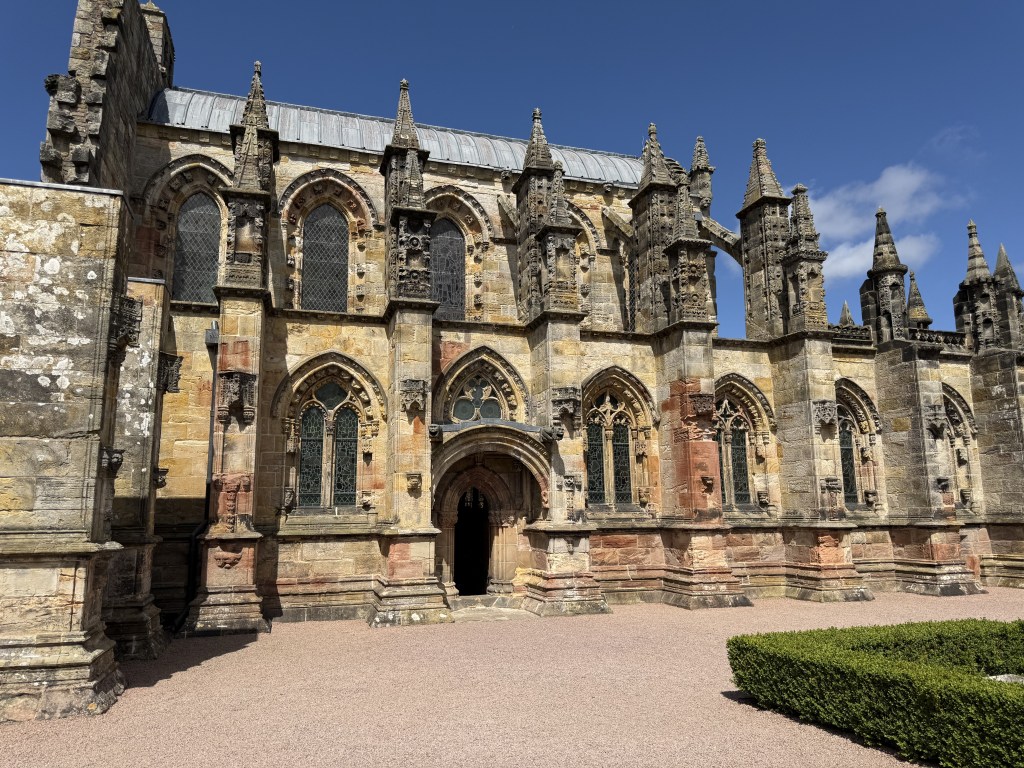
It took us about an hour to get to the Rosslyn Chapel. During the ride, our guide, Isabella, regaled us with some Scottish history.
There are 3 bridges over the Firth of Forth, the ones you had to go below with your cruise ship to arrive here. Each of them dates to different centuries. Forth Bridge (Red Railway Bridge): Opened in 1890, a UNESCO World Heritage Site due to its advanced engineering. Still in active use for trains (e.g., Edinburgh to Dundee). Forth Road Bridge: Mid-20th century, formerly carried heavy road traffic but now used less due to wind closures and traffic management. Queensferry Crossing: Opened in 2017, the newest bridge, now taking most heavy traffic.
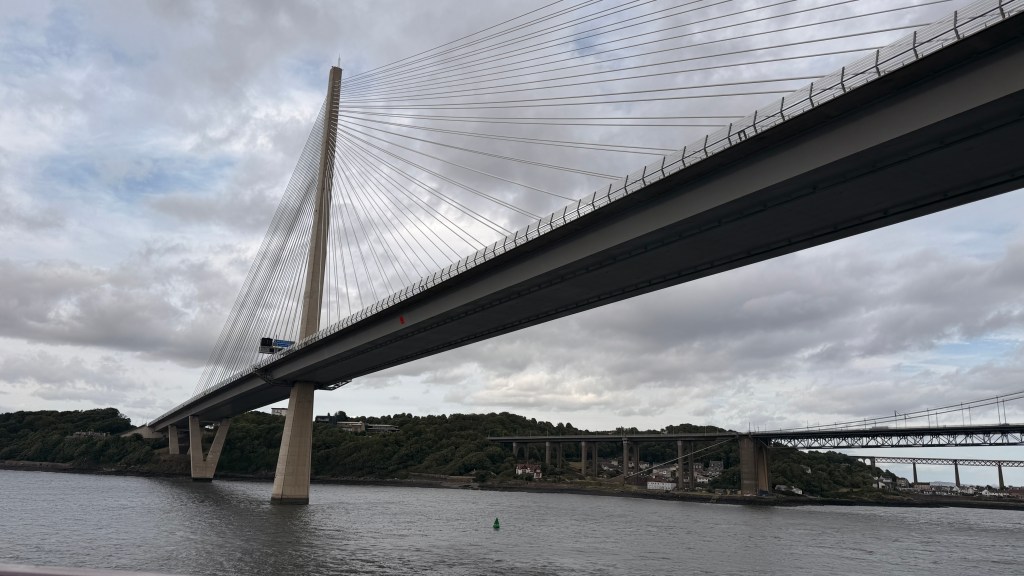
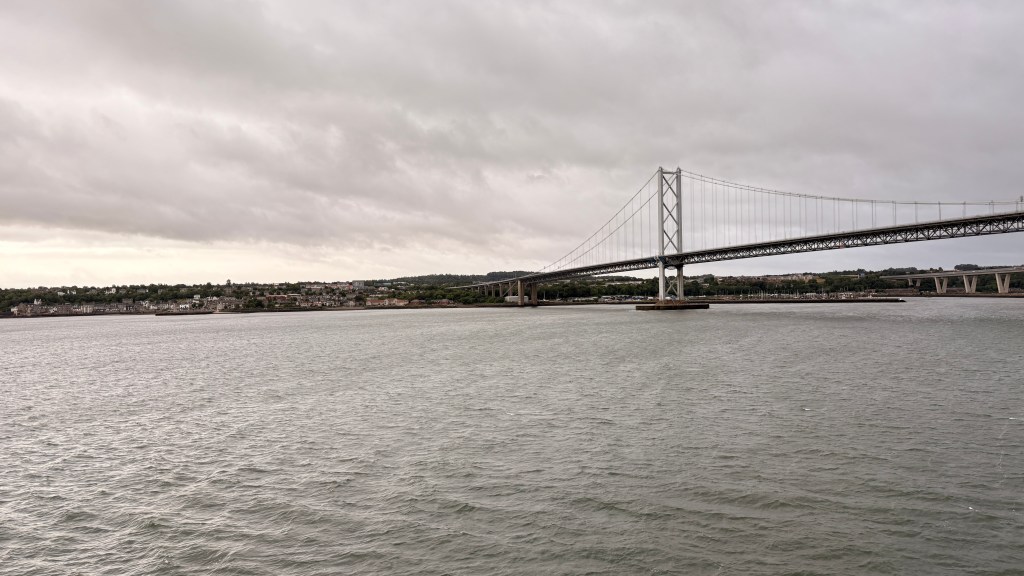
There are Islands in the Forth, many with WWII bunkers, reflecting the area’s long history of needing defense—from Viking invasions to modern times.
The town of Queensferry was named after Queen Margaret (11th–12th century Anglo-Saxon princess), who established a free ferry for pilgrims traveling to St. Andrews. Queen Margaret was an Anglo-Saxon princess, exiled in Hungary during the Norman Conquest of England, who married King Malcolm of Scotland.
Her cultural contributions included:
– Invited monastic orders, which fostered education, herbal medicine, and agricultural innovation.
– Monks established early schools (for both rich and some poor), the beginnings of public education.
– Monks’ knowledge of distillation contributed to the origins of whisky and herbal medicine.
– Queen Margaret and Malcolm’s son, King David I, granted trading rights to what became Edinburgh.
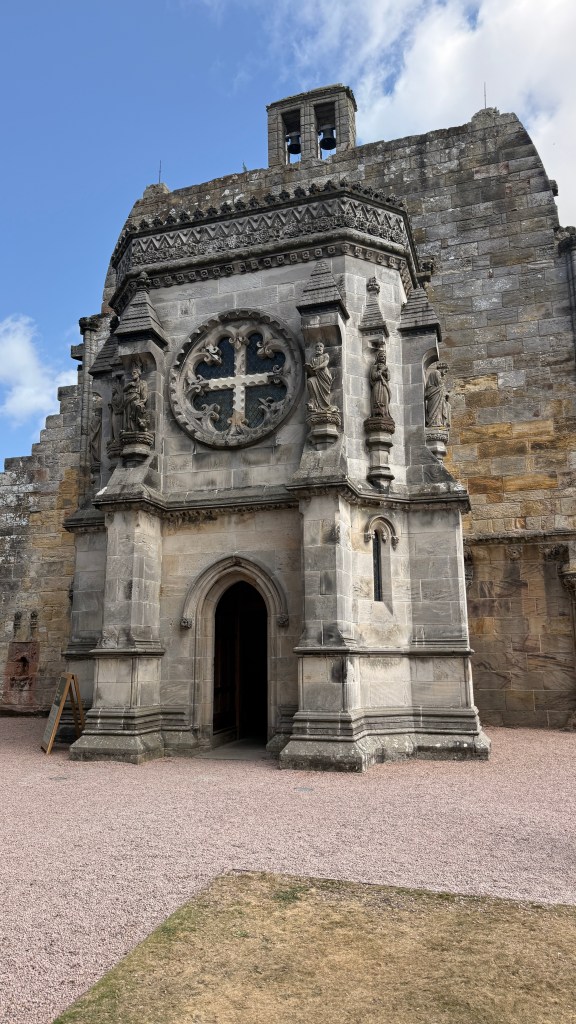
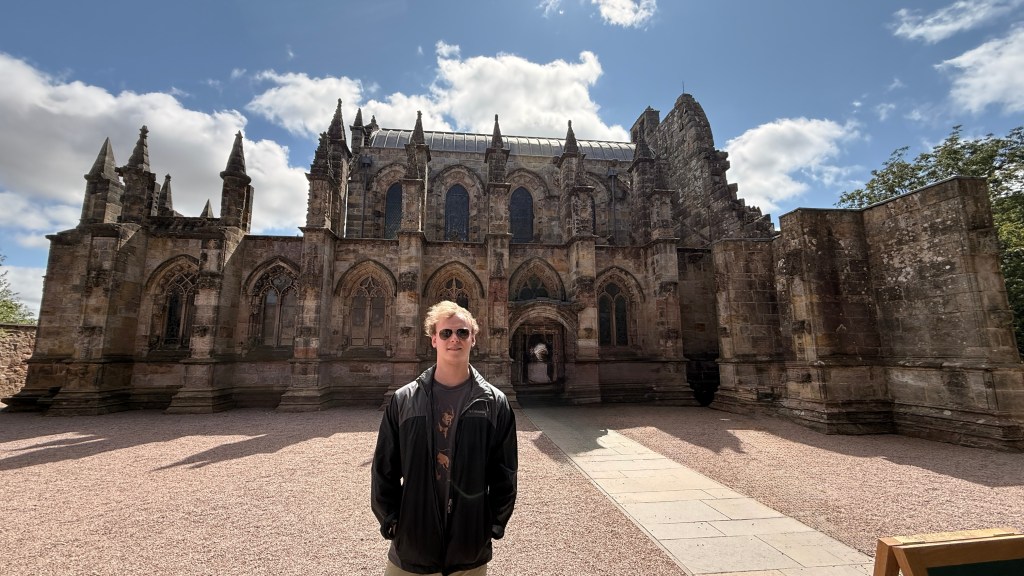
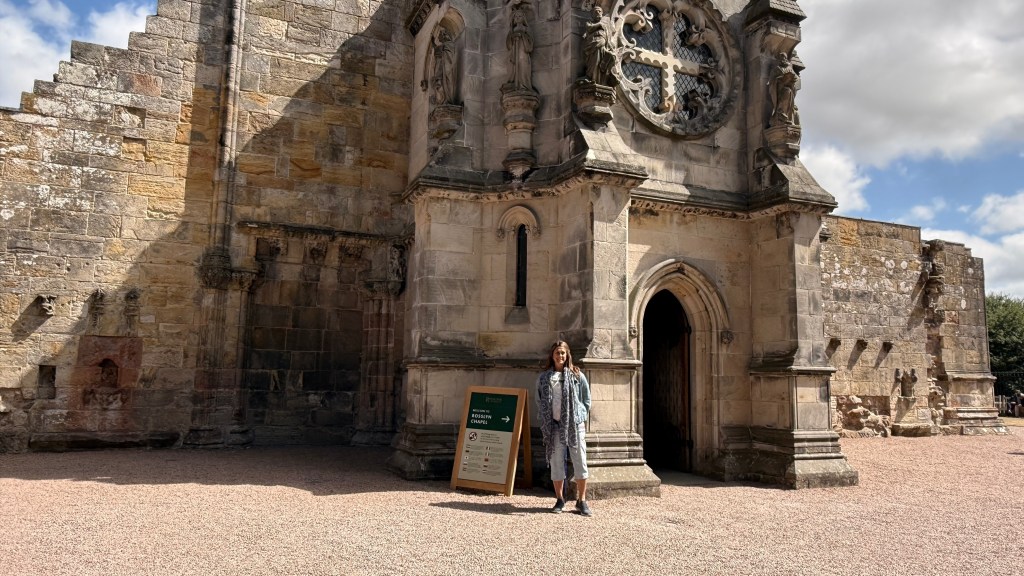
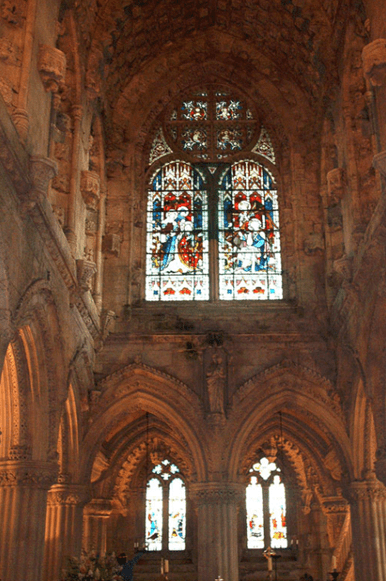
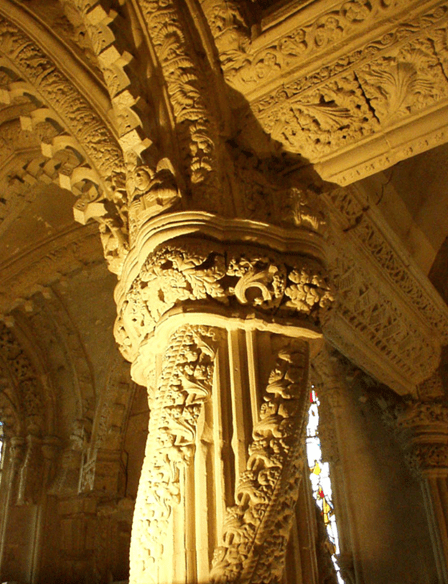
We also got some history of the Chapel. Rosslyn Chapel was built in the mid-15th century by William St. Clair and was originally planned as a catholic cathedral. Today it is still owned by the St. Clair (Sinclair) family and is now a Scottish Episcopalian chapel (in communion with the Anglican Church). After the Scottish Reformation in 1560, Catholic worship in the chapel was brought to an end. The chapel’s altars were destroyed in 1592.
In 1842 the chapel, then in a ruined and overgrown state, was visited by Queen Victoria, who expressed a desire that it should be preserved. Restoration work was carried out in 1862 by David Bryce on behalf of James Alexander, 3rd Earl of Rosslyn. The chapel was rededicated on 22 April 1862, and from this time, Sunday services were once again held, now under the jurisdiction of the Scottish Episcopal Church.
The Rosslyn Chapel Trust was established in 1995, with the purpose of overseeing its conservation and its opening as a sightseeing destination. The chapel underwent an extensive programme of conservation between 1997 and 2013. This included work to the roof, the stone, the carvings, the stained glass and the organ. I’ve included a few stock photos of the inside since photos have not been allowed inside sonce 2008.
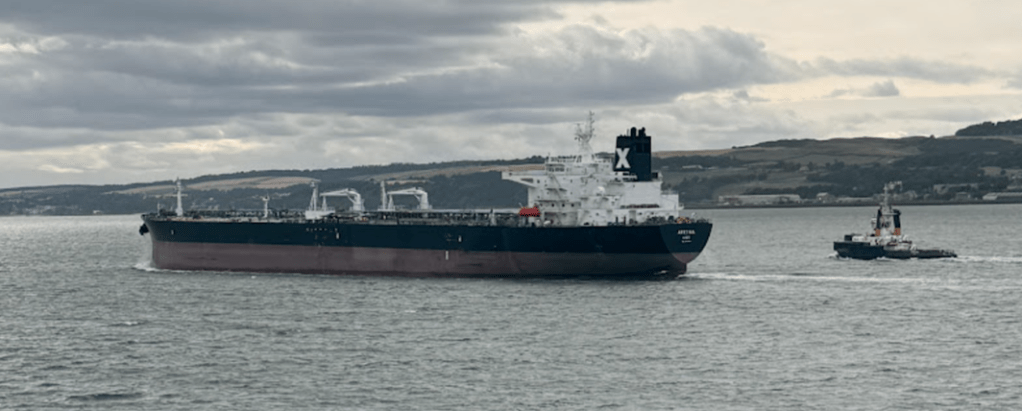
As we were sailing away from the port we passed this tanker called Aretea so I looked it up. The Aretea is a Greek-flagged crude oil and product tanker built in 2015, measuring 250 meters in length with a deadweight of 113,969 tons. I guess oil is getting to Scotland from somewhere despite the war.
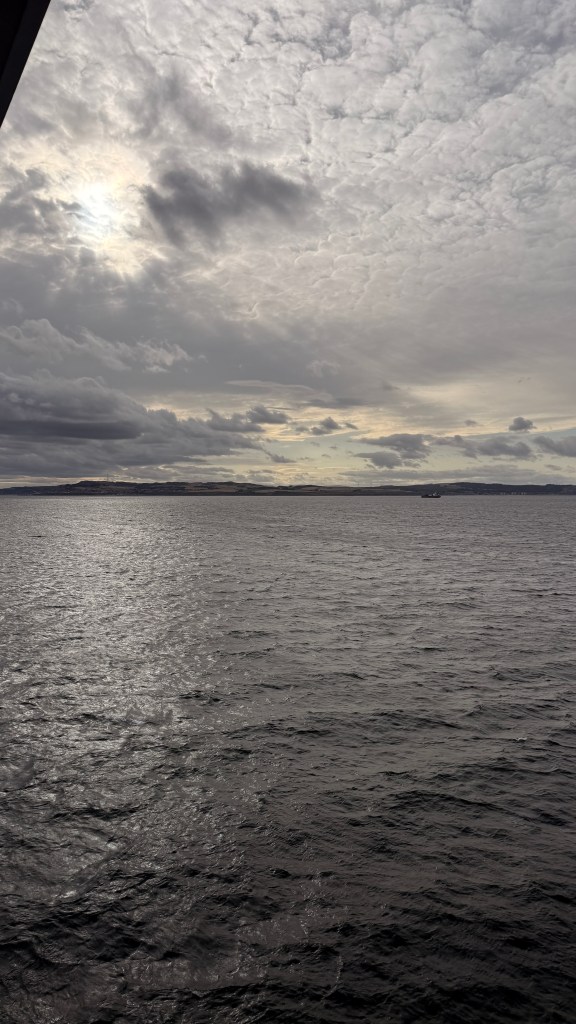
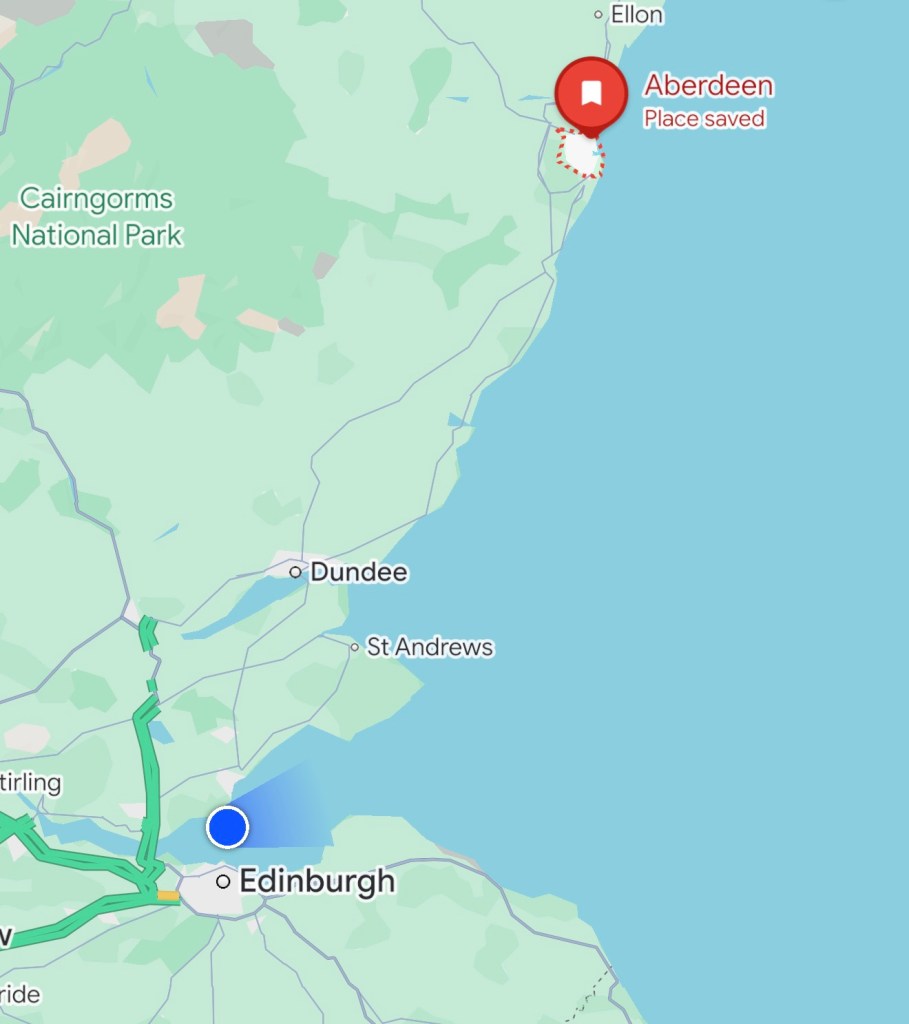
Here’s what the end of the day looked like and where we are heading tomorrow. The sun was just peaking through the clouds. See you in Aberdeen tomorrow. Shane and I will be heading into town in the morning and then going to a Highland Cattle Farm in Bancory in the afternoon. Shane is planning to befriend the cows and then eat them. The blurb about the excursion says: “Meet a prize-winning herd of Highland cows at a working farm and then taste premium beef with local refreshments,” so he didn’t make it up. Haha! G’nite all and see you in Aberdeen.


Leave a Reply