So remember when I mentioned that we had some high seas last night and that I could feel the ship rolling back and forth? I did fall asleep with no trouble and didn’t wake up until my usual 6am. Well, there were high winds when we arrived in Kirkwall this morning, and we were unable to dock. The captain tried 4 times over 3 hours to come alongside the pier, but the winds were preventing him from getting safely close to the dock. They kept making announcements on the speaker that he would try again and that we shouldn’t worry because he’s the best captain in the fleet or something like that.
He came in forwards, and then went back out to the inlet and came in backward. Then he tried again and again… and we finally docked around 1130 am. By the time they figured out the logistics of the morning excursions and the afternoon excursions, we found out that they canceled our excursion. <boo hoo>
Also, the weather was really stinky today: mid-50s and windy (of course) and raining. So, Shane decided that this would be a day off from excursions, and traipsing around in the rain didn’t sound like fun at all. I agreed, so we spent the day in the cabin. Shane on his computer, and me on mine. He played Minecraft, and I worked on PSU classwork to get ready for the Fall semester, read my book, and did laundry. I know that doesn’t sound very exciting, but Shane’s been blowing his nose a lot, so it made sense and was very relaxing. I think he’s finally feeling better and just in time for Edinburgh tomorrow.
Around 6 pm, when everyone was aboard, they announced that as we motor down the east coast of Scotland, the weather wasn’t any better and that around midnight, they expected 5-7 ft swells. I’m taking my Dramamine now as I write this to you.
So here’s what I know about Kirkwall, and what Viking says about what we were “planning” to do today.
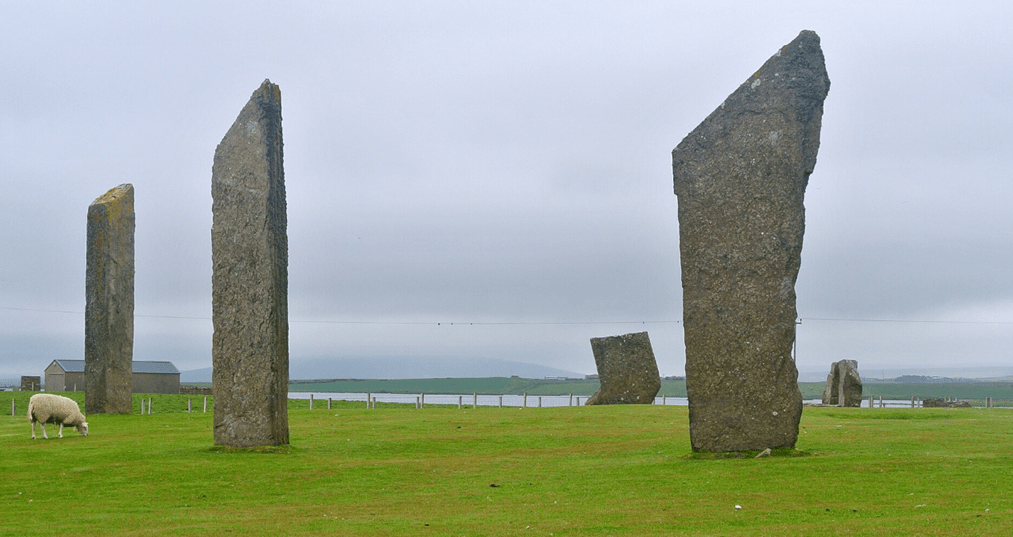
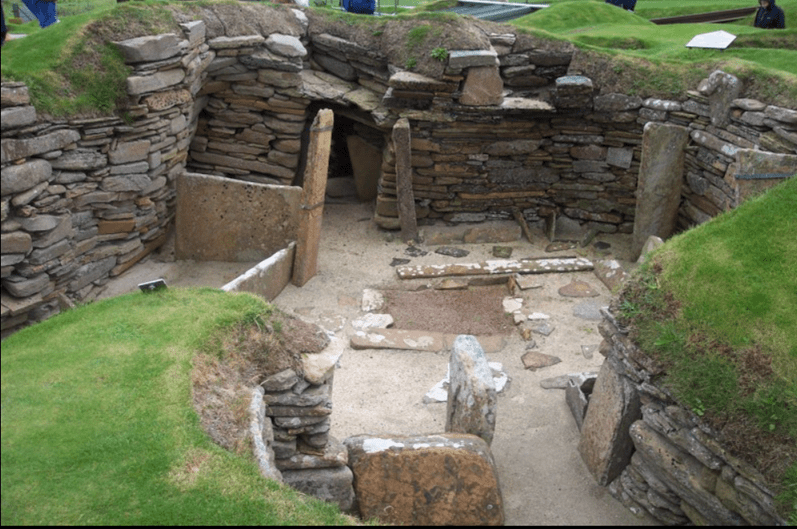
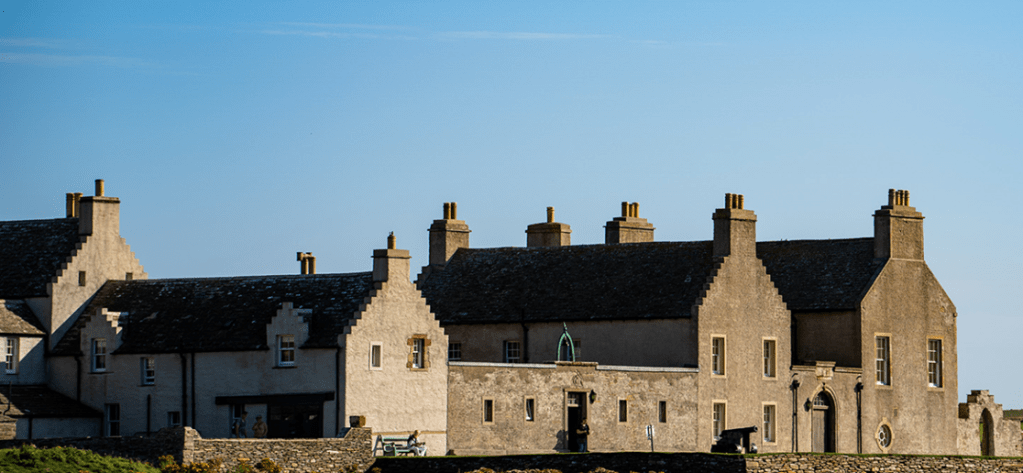
“Witness untold centuries of human settlement during visits to Orkney’s Neolithic and Viking sites. Take a drive through rolling landscapes, passing prehistoric sites such as the Standing Stones of Stenness, dating to the third millennium BC. Stop at the well-preserved Stone Age settlement of Skara Brae, and explore one of Europe’s most complete Neolithic villages. Older than Stonehenge, it has been called the “Scottish Pompeii” because of its remarkably preserved dwellings. Visit the 17th-century Skaill House, built by Bishop George Graham. All 12 of its lairds have been related during its 400-year history, and the house features memorabilia collected from each generation. Return to your motor coach and continue on this circular route, following the coastline of Scapa Flow.”
The Standing Stones of Stenness (pronounced “stane-is” in the Orcadian dialect; Old Norse for “stone headland”) are a Neolithic monument five miles northeast of Stromness on the mainland of Orkney, Scotland. This may be the oldest henge site in the British Isles. Various traditions associated with the stones survived into the modern era, and they form part of the Heart of Neolithic Orkney World Heritage Site. They are cared for by Historic Environment Scotland as a scheduled monument.
Skara Brae is a prehistoric settlement in the Bay of Skaill on the west coast of the island of Mainland in the Orkney Islands in Scotland. The settlement consists of eight stone houses and was inhabited between an estimated 3180 and 2500 BC. The houses are connected by passages, making the settlement the first in the area to have the character of a pure village. Archaeologists estimate that the settlement housed at most 50–100 people.
Overlooking the Bay of Skaill, Skaill House is Orkney’s finest 17th-century mansion, standing beside the world-famous Neolithic settlement of Skara Brae. Spanning thousands of years of history, Skaill House is renowned for its contribution to Orkney’s rich and fascinating past and its close connection to Skara Brae. Today, following careful restoration, the house is open to the public.
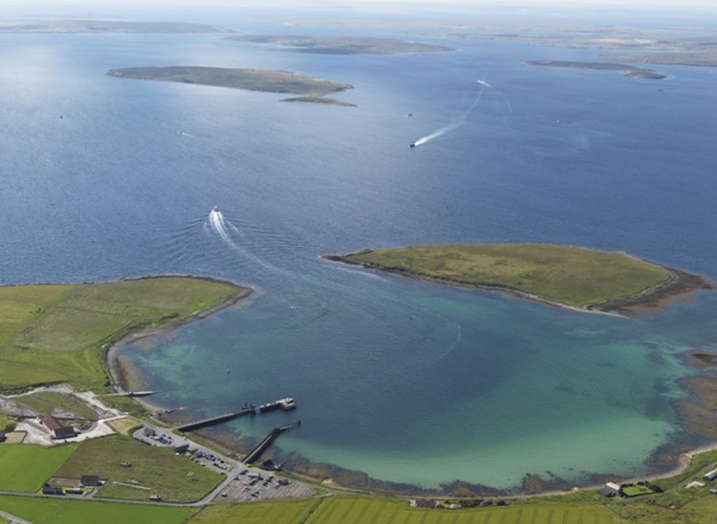
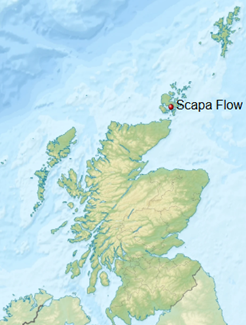
And: Scapa Flow, a body of water that played an important role in travel, trade, and conflict throughout the centuries. Vikings anchored their longships in Scapa Flow more than a thousand years ago. It was the United Kingdom’s chief naval base during the First and Second World Wars, but the facility was closed in 1956.
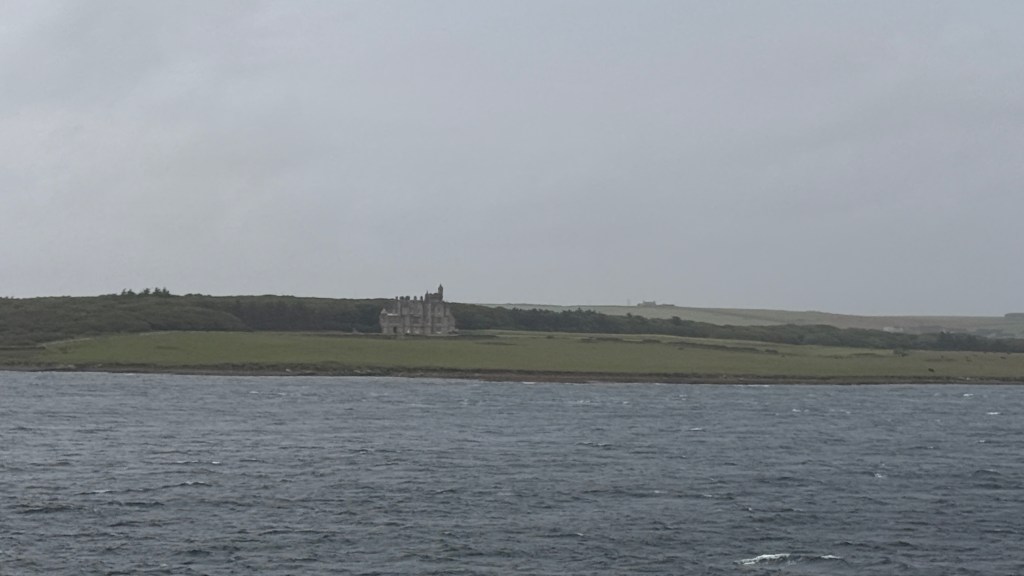
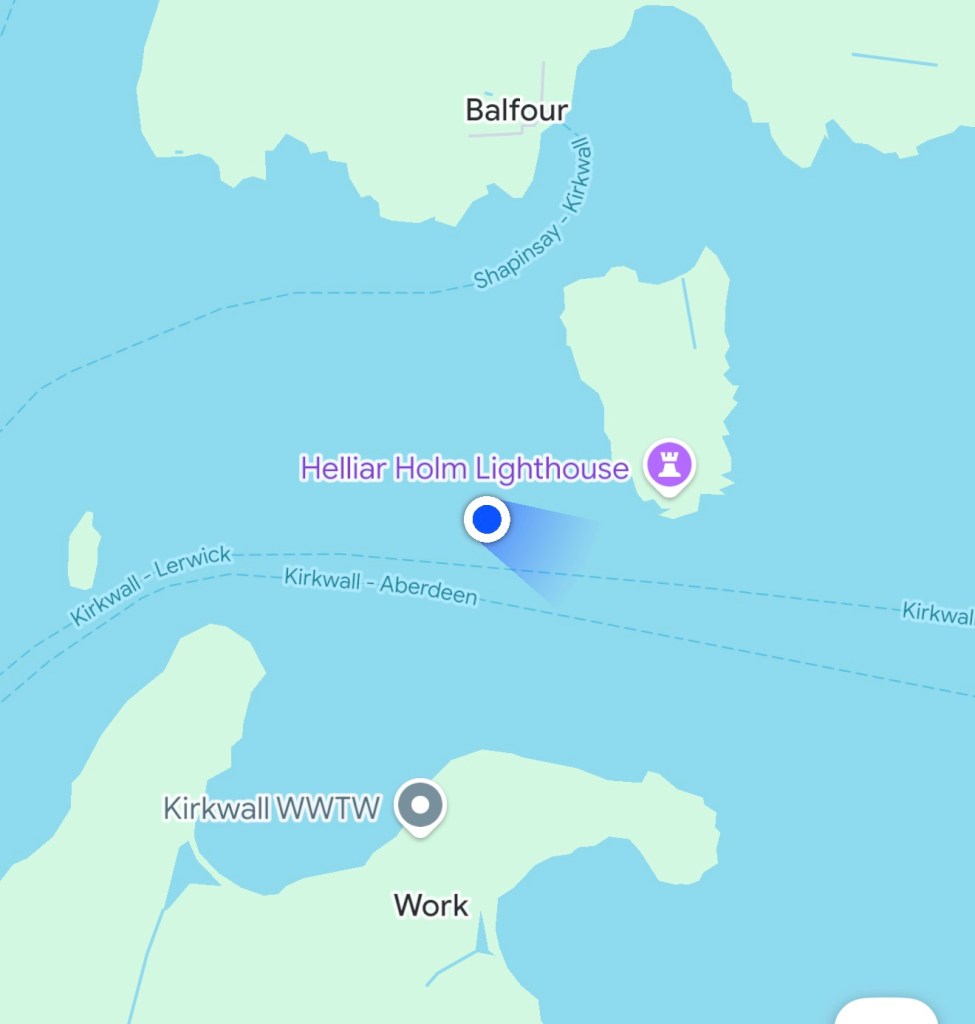
So, on the way out of the harbor, we did see some pretty interesting sights. A castle just sitting there on the point with nothing around it, and another house that kind of looked like Midhope Castle from the Outlander series, with a lighthouse on the peninsula.
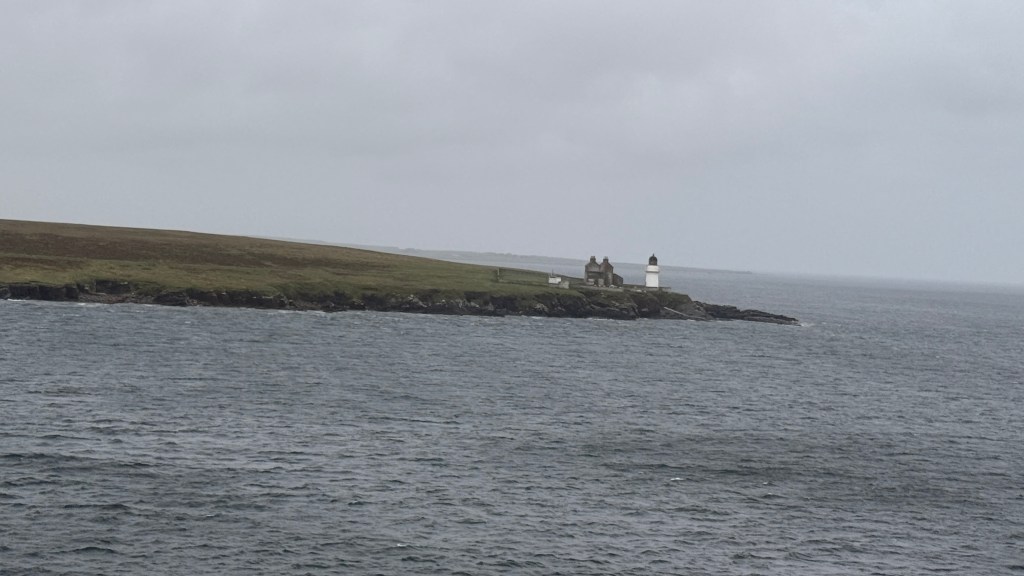
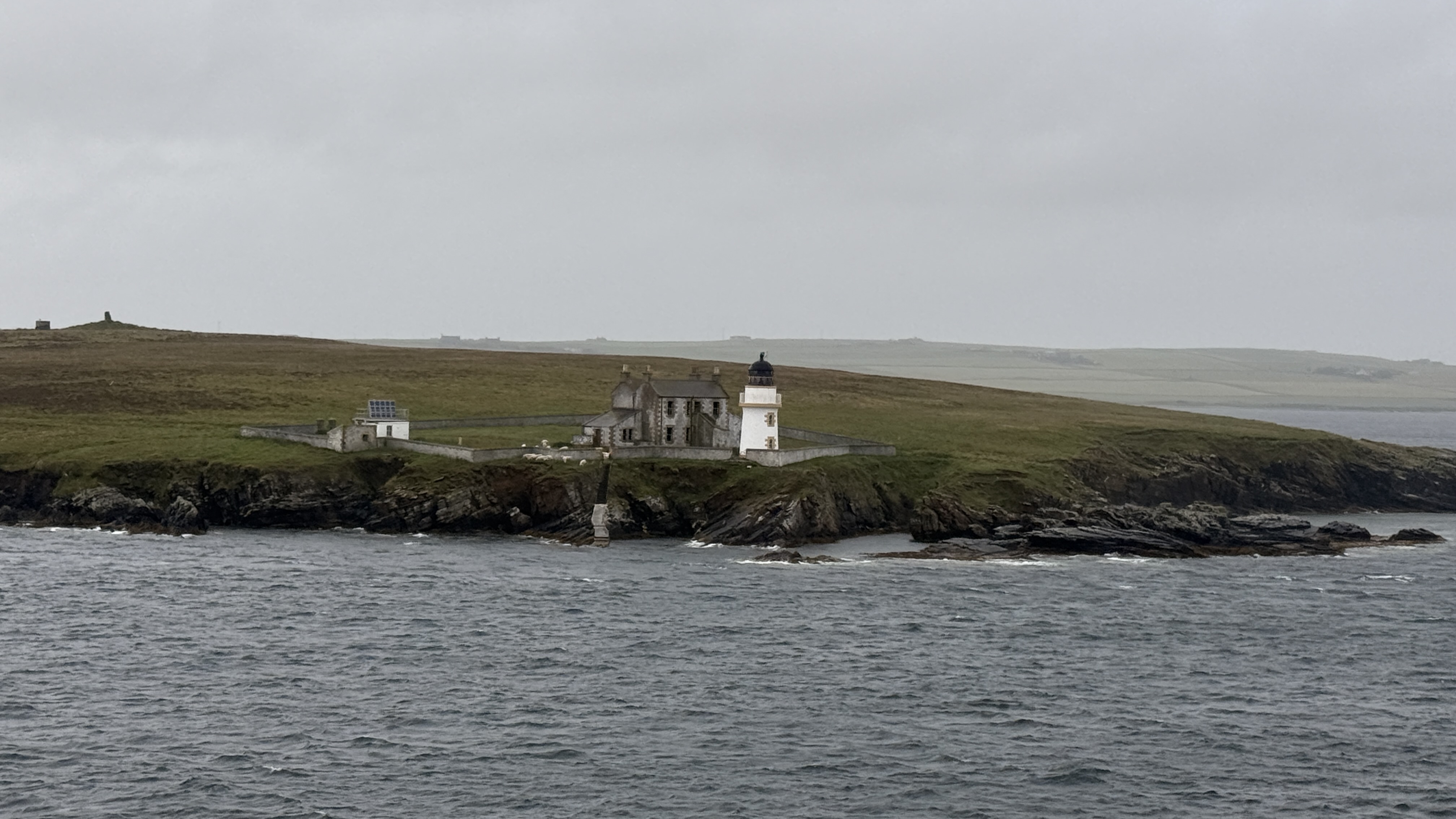
Here’s where we were when I saw it and its name in case you wanted to look it up.
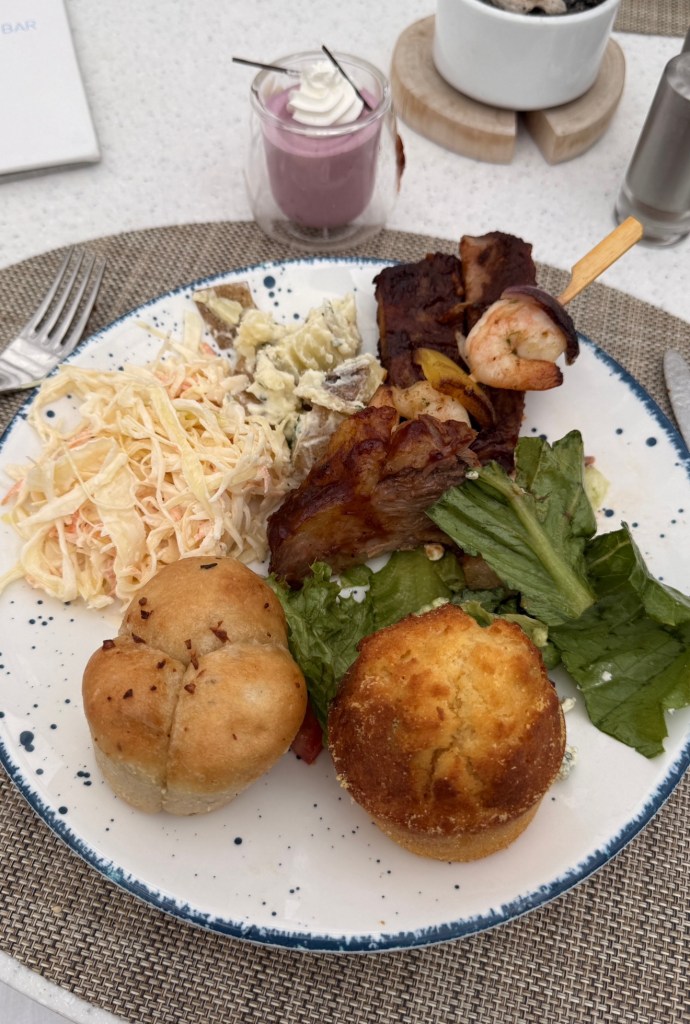
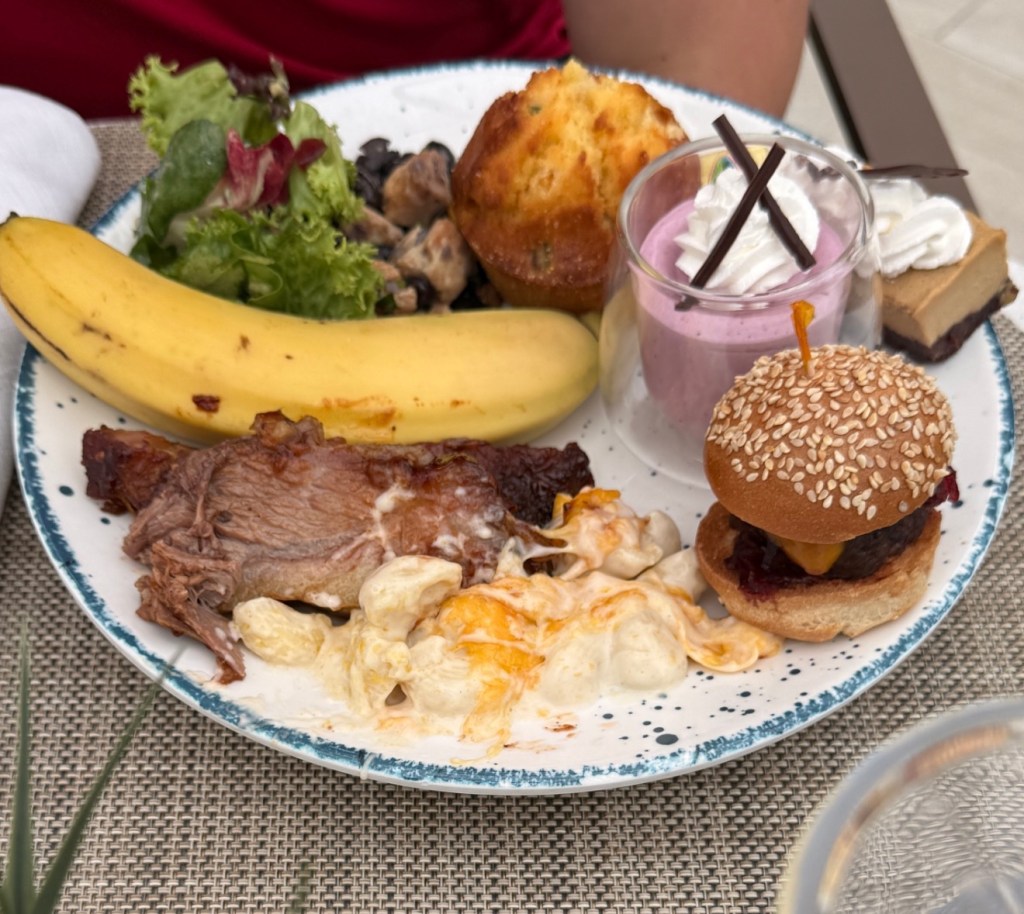
And so, with nothing else to talk about and no photos of us to share, it’s back to food. For dinner tonight, they had a BBQ with ribs and brisket, corn bread with jalapeños, potato salad, and coleslaw. There were also sliders, which Shane said were ok. For dessert, blueberry mousse and apple crumble with vanilla ice cream.
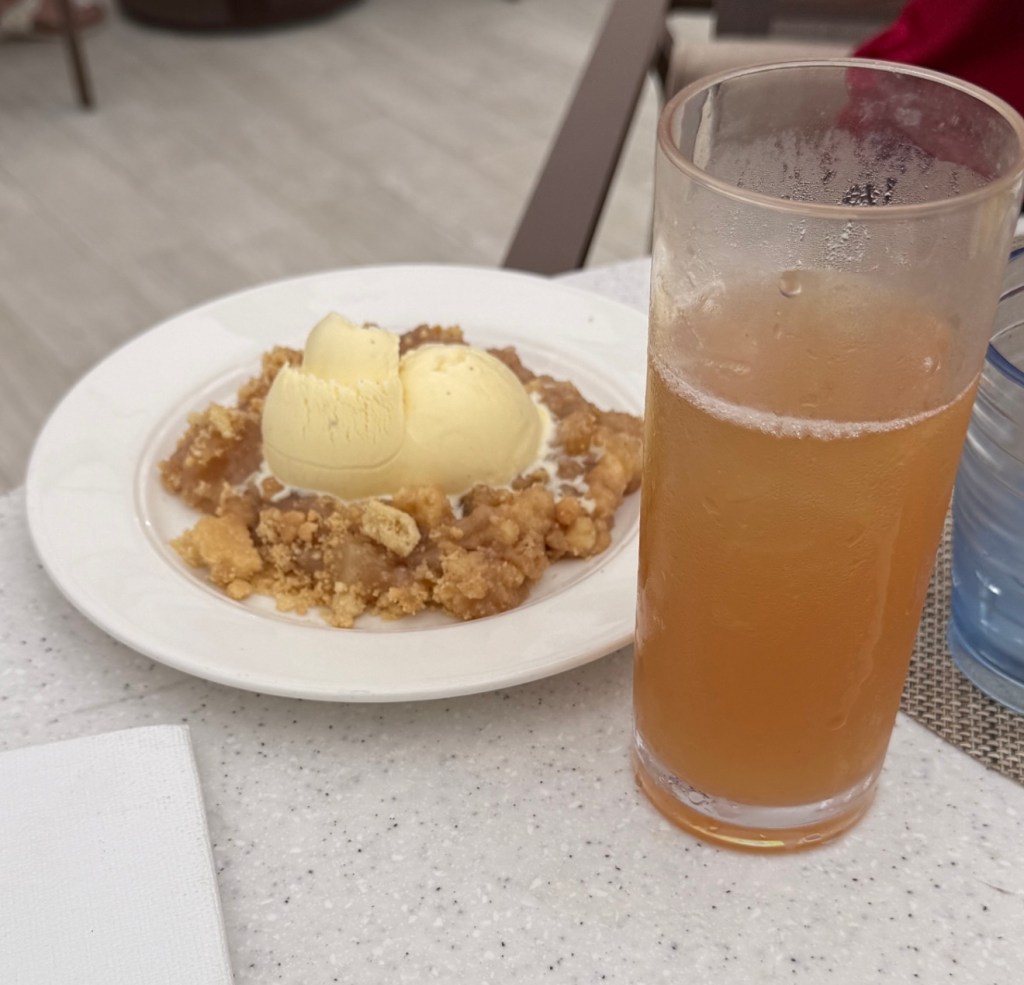
Arnold Palmer
(not beer)
I’m hoping to have some time tomorrow to actually go into Edinburgh and walk around. We do have a tour of Rosslyn Chapel, but that’s not in Edinburgh; it’s in Roslin, which is quite a way from the city, and I’m sure we’ll take a coach. Our tour is supposed to start at 1pm, and we need to meet on the pier, so I don’t know if we can go into town for an hour and then get back at 1pm. I’ll surely let you know how it all turns out.
Have a great day, Tracy


Leave a Reply