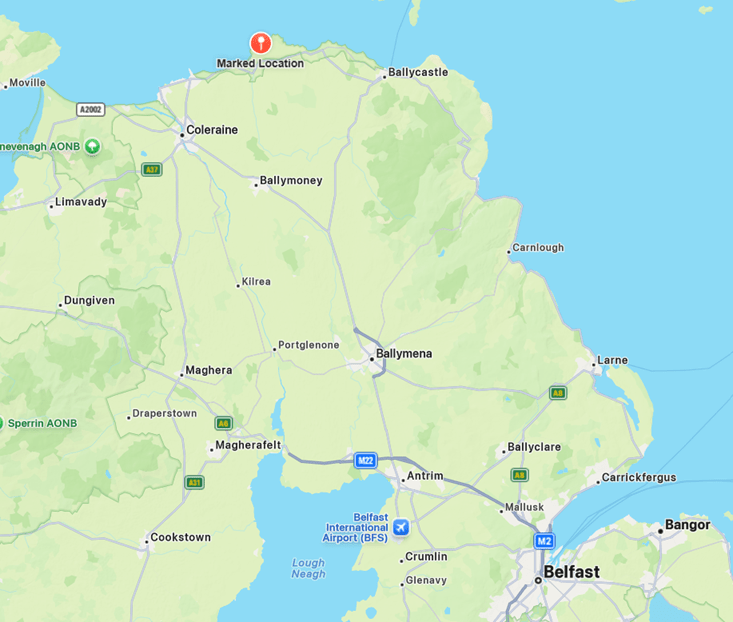
It was a long bus ride today, about 90 minutes, from Belfast Harbor to Giant’s Causeway (see the marked location at the top of the map). Our guide Jennifer was perky and full of Northern Ireland factoids. Can you believe that I didn’t know that the Titanic was built in Belfast? How did I not know that?
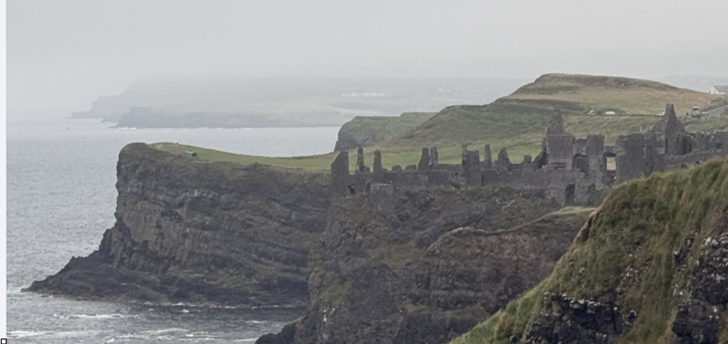
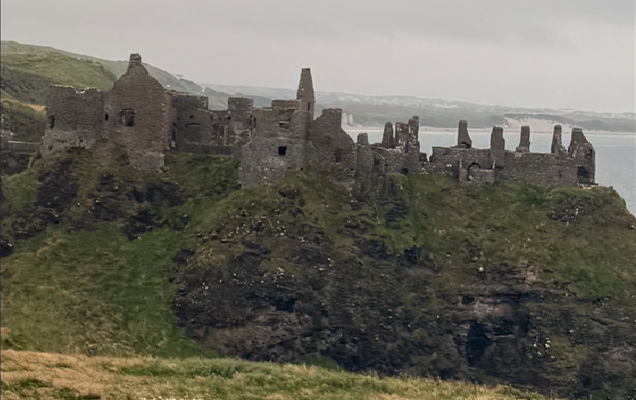
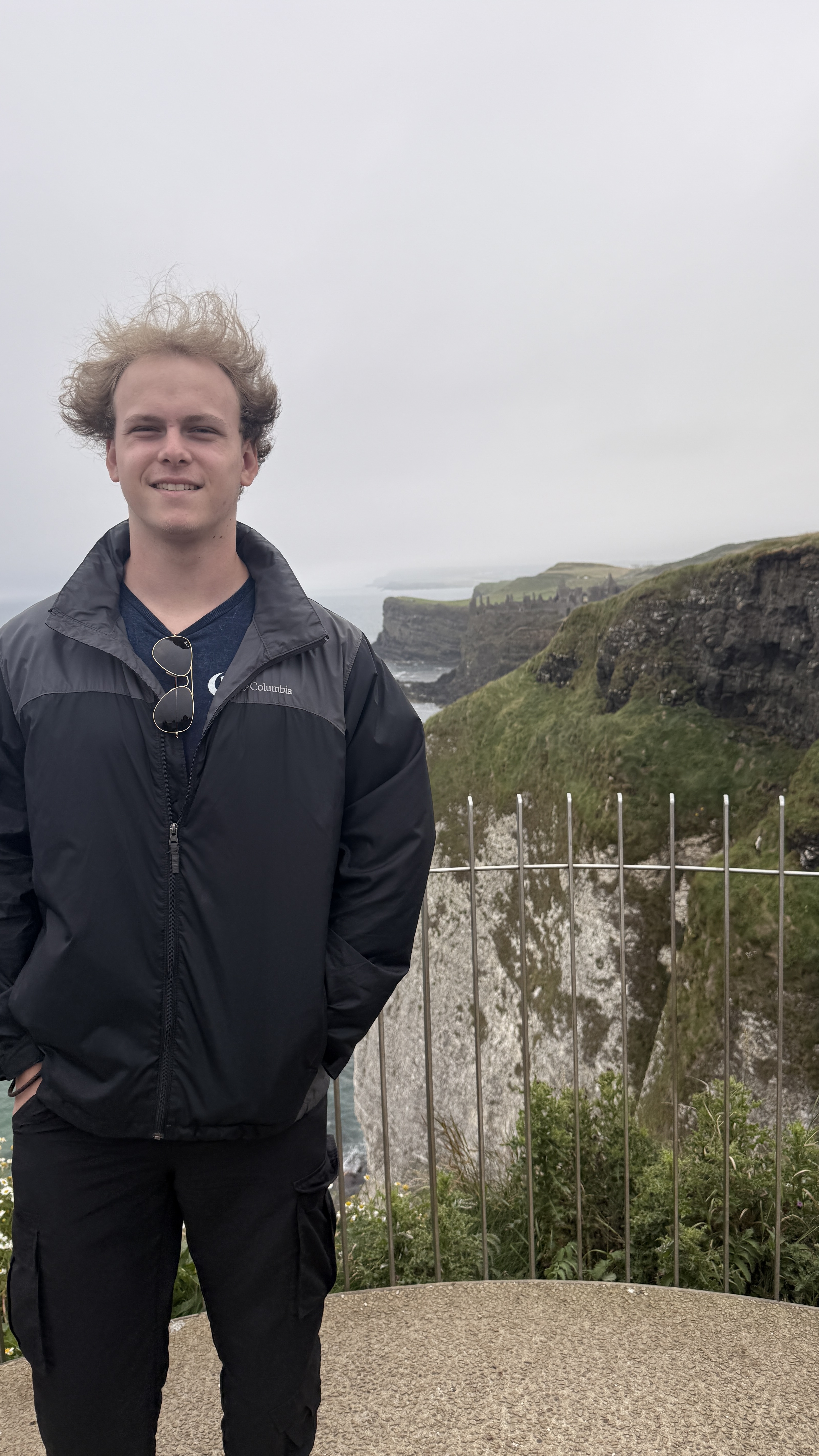
We stopped along the way at a scenic lookout, Magheracross Viewing Point, where we could see the remains of medieval Dunluce Castle. Richard Óg de Burgh, 2nd Earl of Ulster, built the first castle at Dunluce. Derived from the Irish Dún Libhse, which means “strong fort on the cliff” and also famous as the filming locaiton of for the Iron Island in Game of Thrones.
The McQuillans were there from the late 13th century until they were displaced by the MacDonnell clan after losing two major battles against them during the mid- and late-16th century. It was documented to be in the hands of the MacQuillan clan in 1513. If that had been our destination, we could have walked through the castle remains, accessing the old castle via a bridge from the mainland. The castle was abandoned because of the impoverishment of the MacDonnells in 1690, following the Battle of the Boyne. Since that time, the castle has deteriorated, and parts were scavenged to serve as materials for nearby buildings.
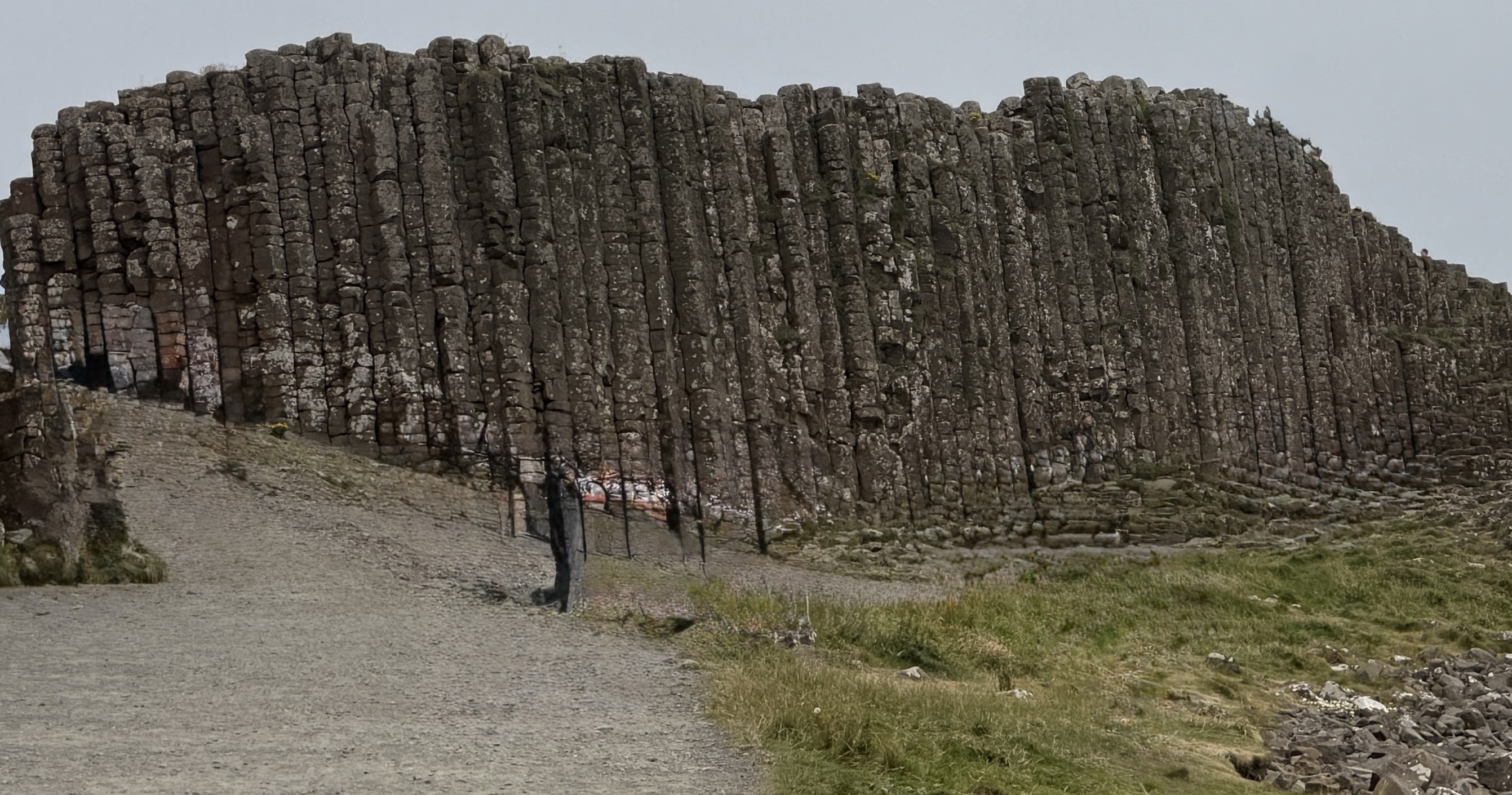
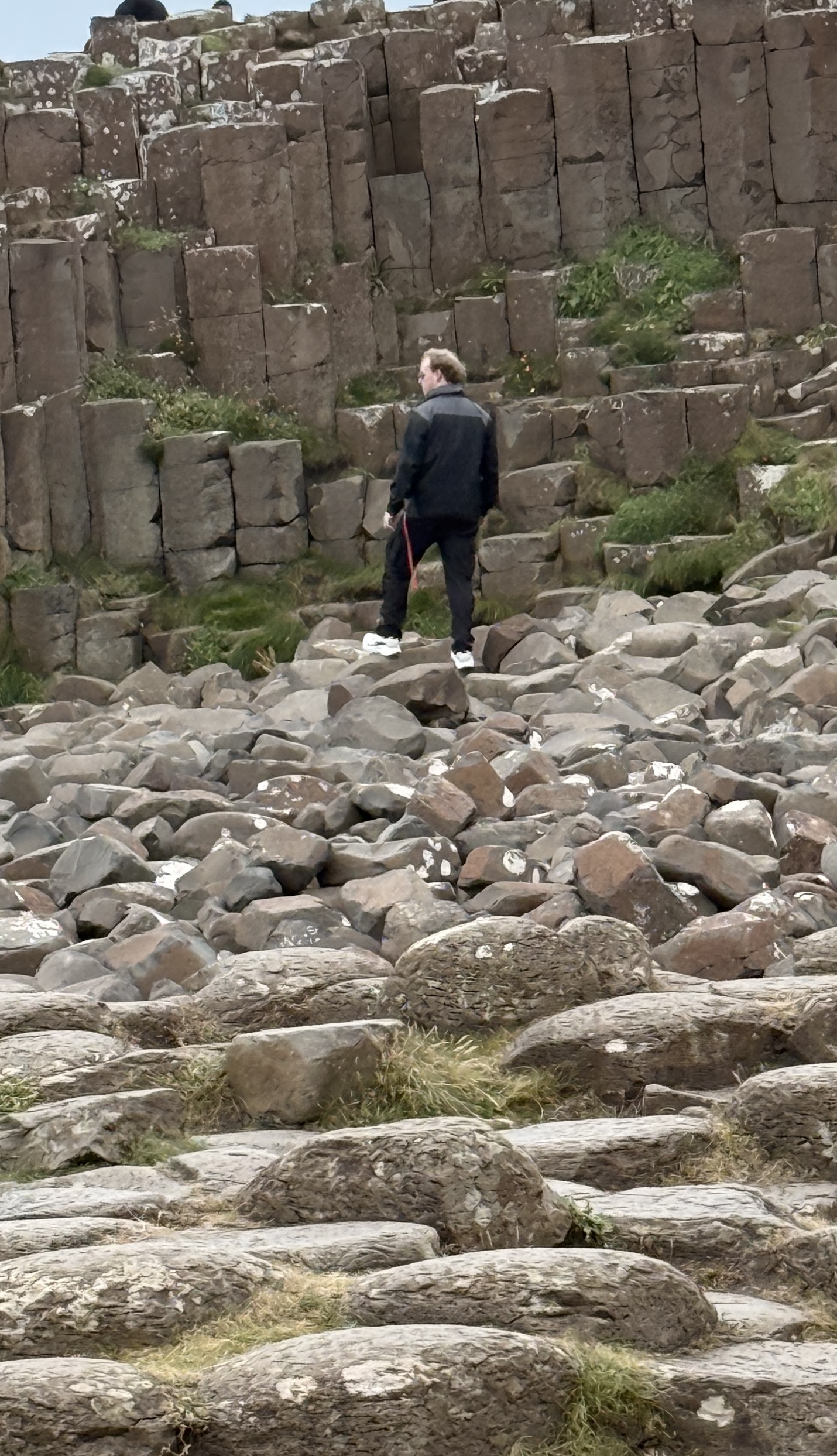
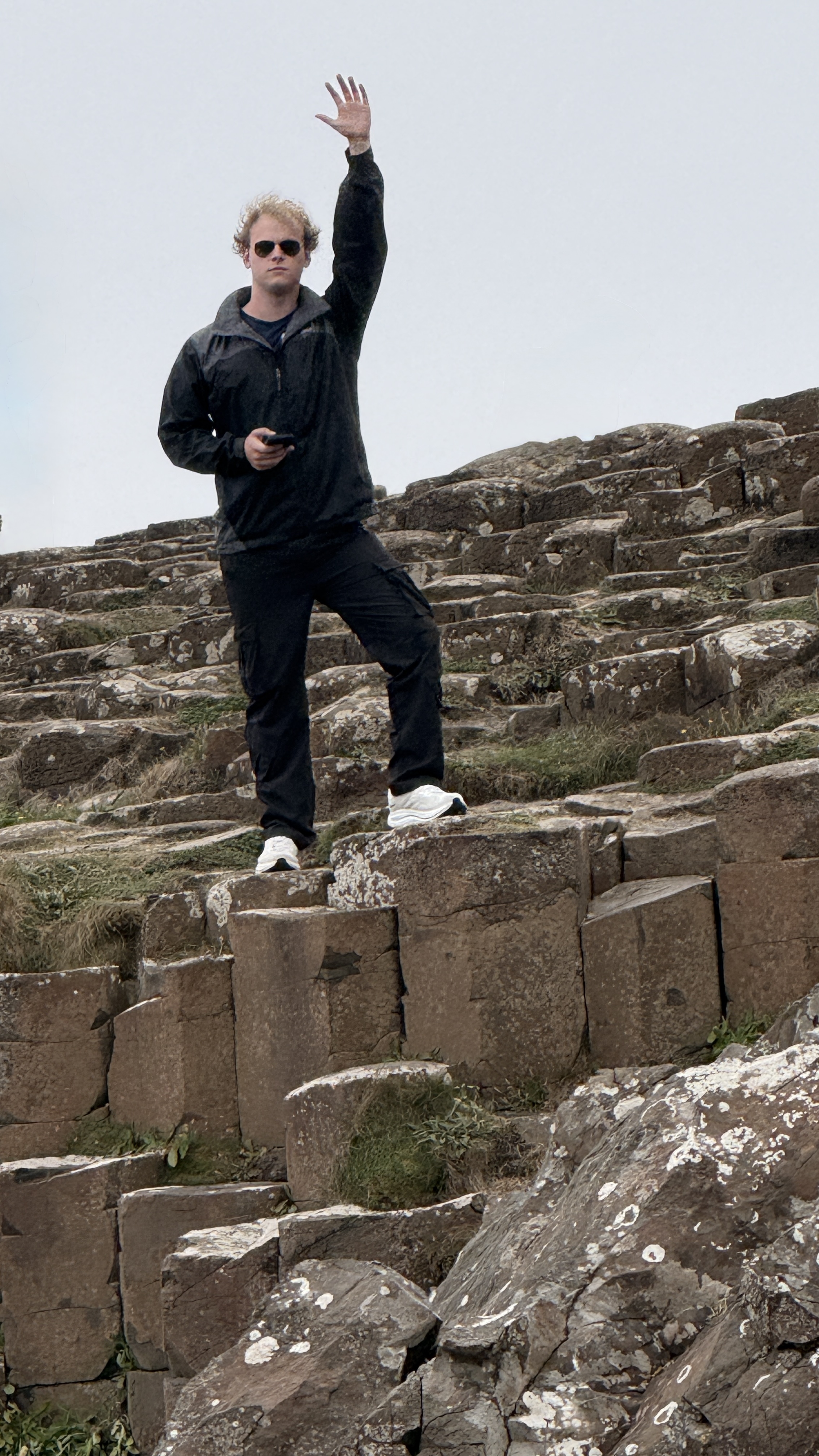
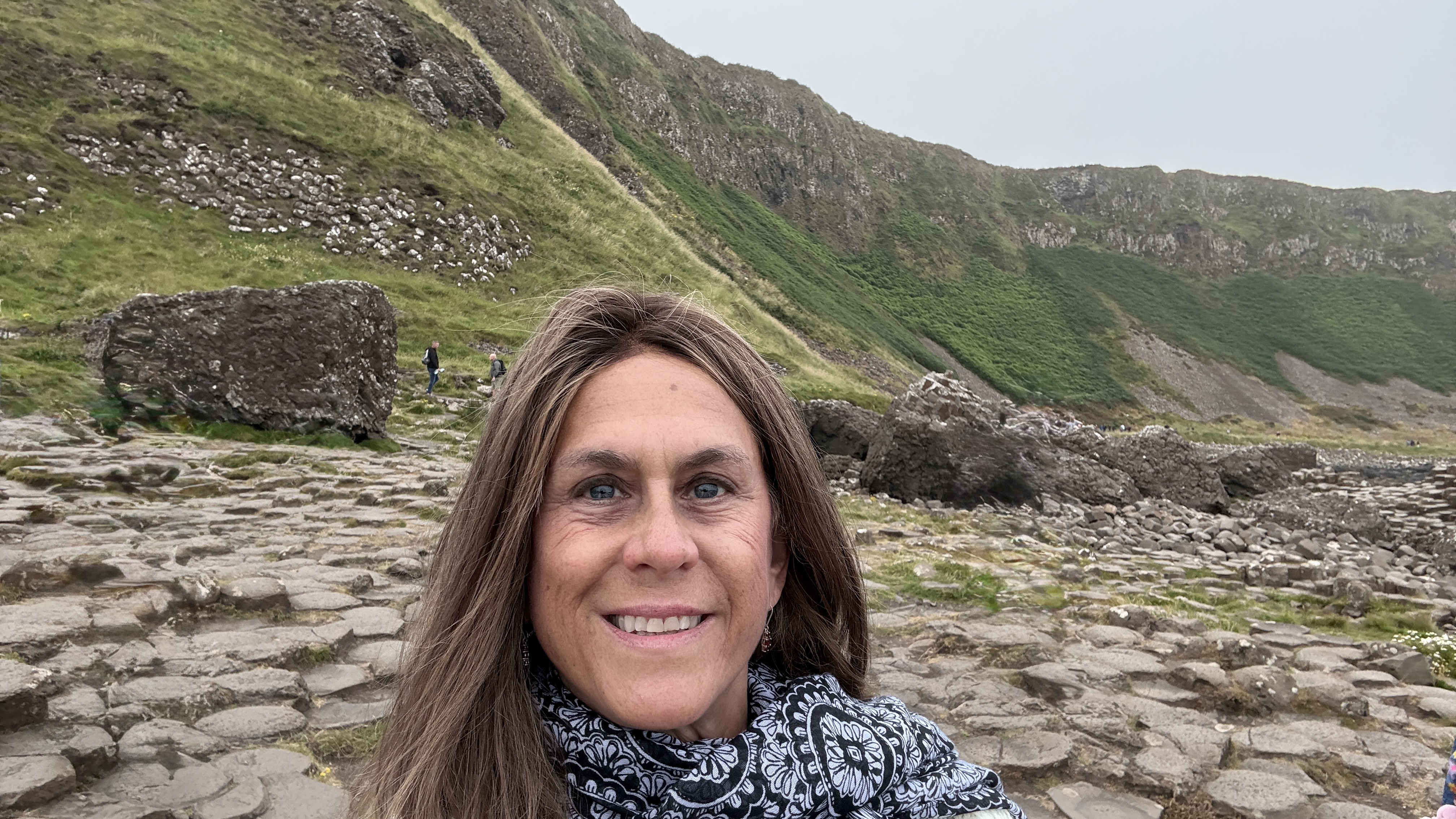
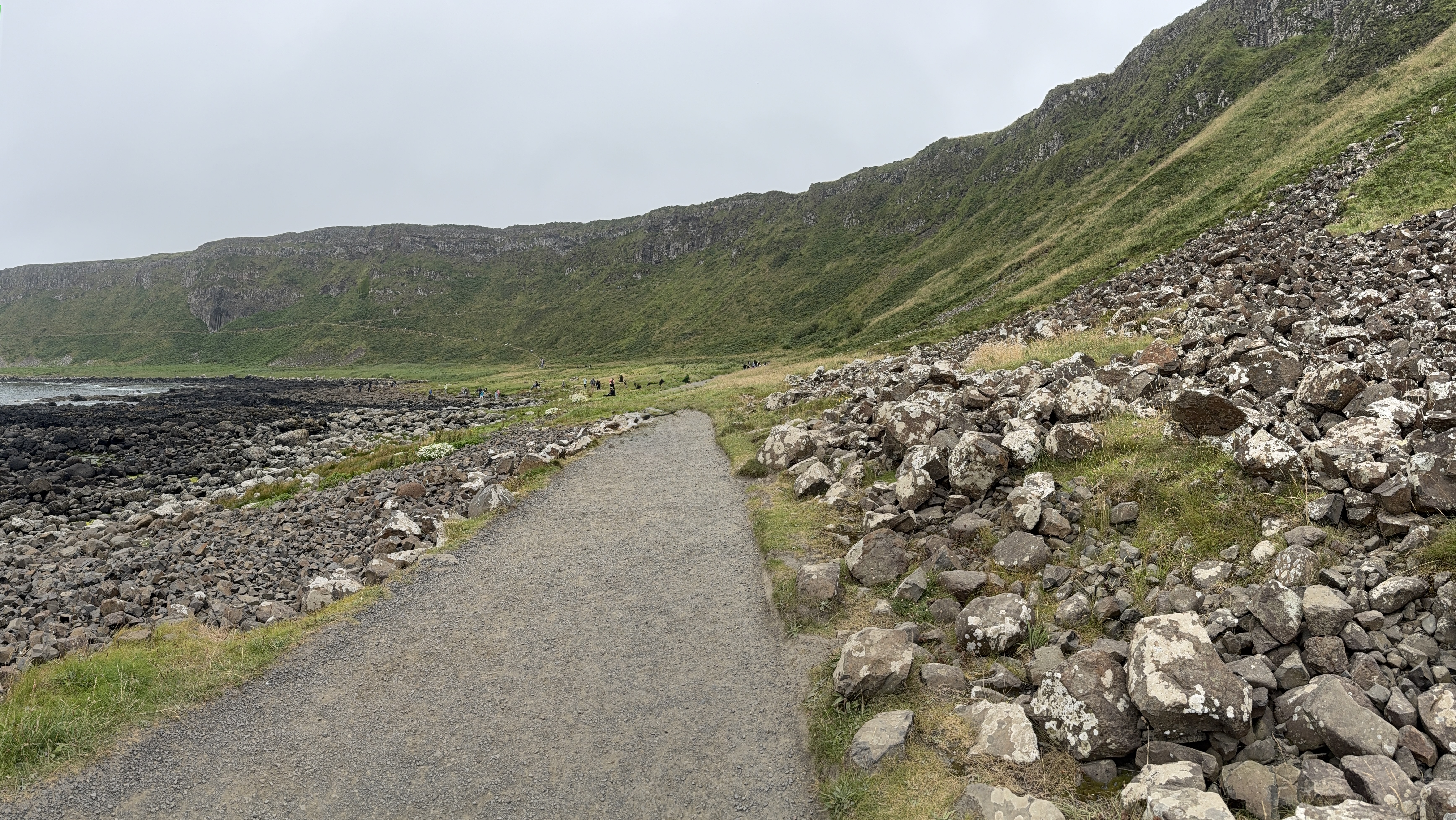
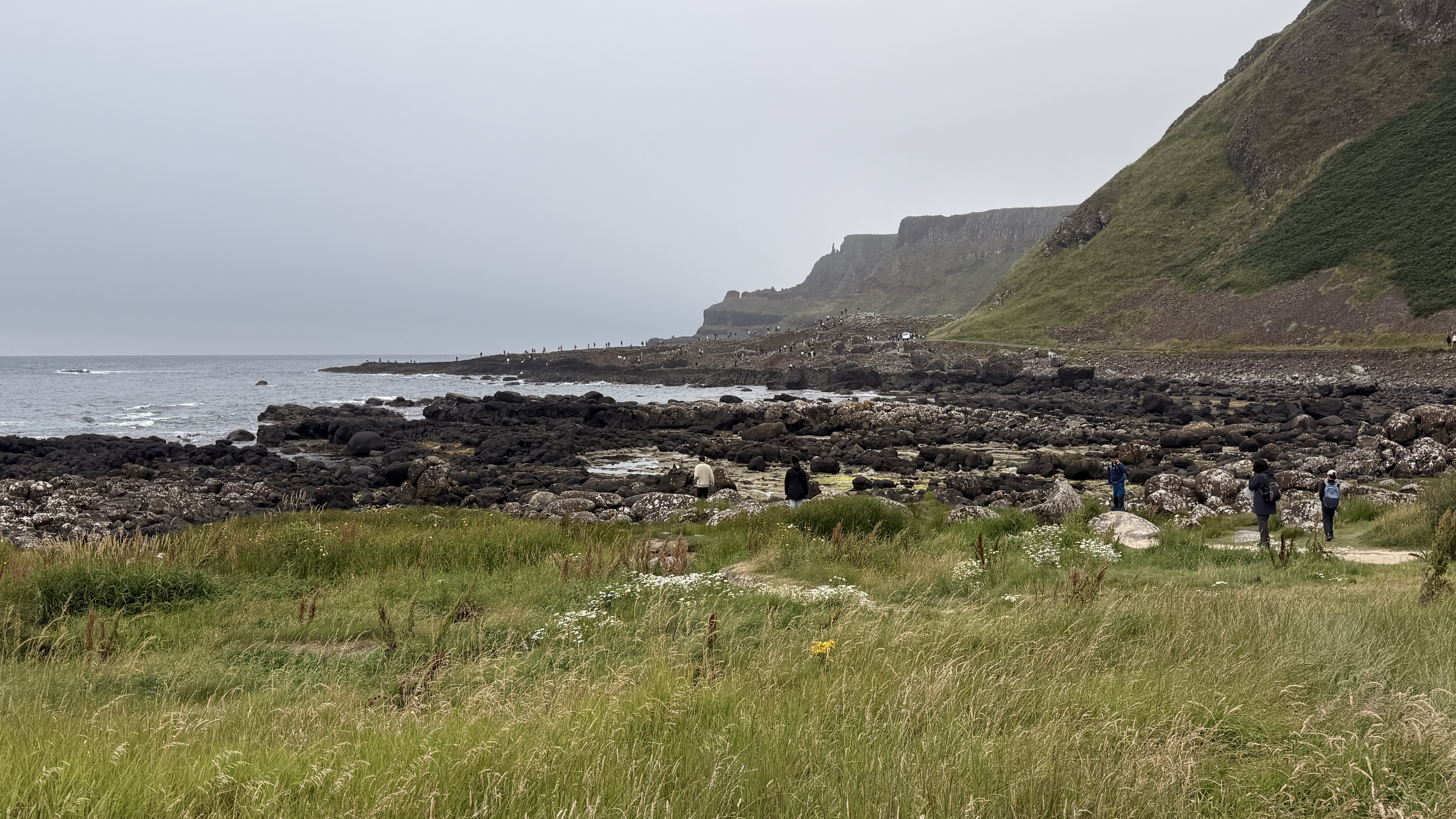
We arrived at the Giant’s Causeway visitor center around noon and had until 130pm to walk around. The scene was breathtaking. It was an inlet with rocks you could only see the tops of, going deep into the ground; approximately 40,000 interlocking basalt columns. They are the result of an ancient volcanic fissure eruption; it looked as though they were man-made pavers, but clearly not. In 2005, the Giant’s Causeway was named the fourth-greatest natural wonder in the United Kingdom.
The tops of the columns form stepping stones that lead from the cliff foot and disappear under the sea. Most of the columns are hexagonal, although some have four, five, seven, or eight sides. The tallest are approximately 39 ft high, and the solidified lava in the cliffs is 92 ft thick in places.
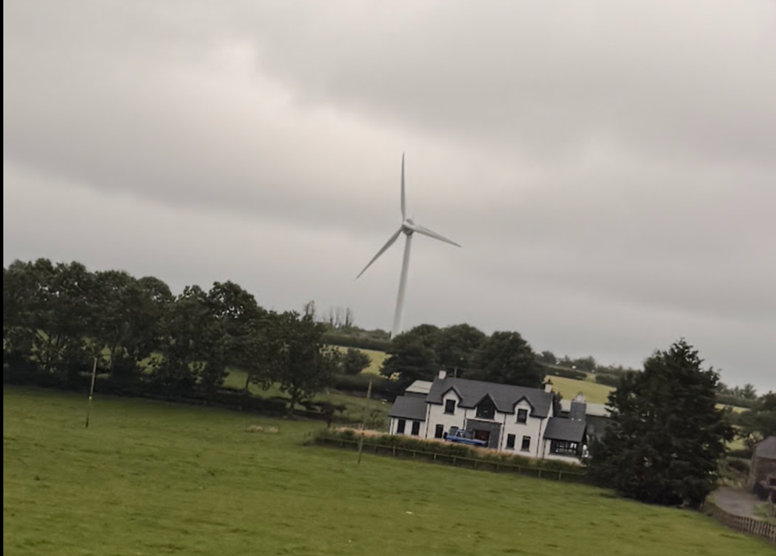
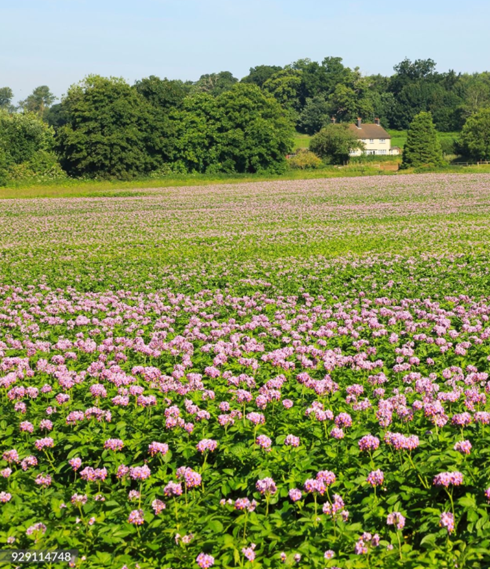
On the drive back to Belfast Port, there were many, many cows and sheep and huge windmills everywhere. Also potatoes… lots of potatoes. I’ve never seen a field of potatoes with flowers before. The guide said that sometimes the flowers are pink and sometimes they are white. So of course I had to look it up.
Potato flowers are white or pink depending entirely on the potato plant. Flower colors range from white to pink, purple, and blue, and are genetically tied to the type of potato being grown. The presence of flowers signals that the plant is mature and starting to form tubers underground.
- White Flowers: Belong to white or yellow-fleshed potato varieties
- Pink/Lavender Flowers: Indicate that the plant produces red-skinned or dark-colored tubers
So now back to the Titanic. So right around the port where we were docked for the day was Harland & Wolff’s Belfast shipyard, where the Titanic was built. Founded in Belfast in 1861 by Sir Edward Harland and Gustav Wolff, Harland & Wolff quickly grew into one of the largest and most famous shipbuilders in the world, employing tens of thousands of workers at its peak. During World War II, the yard was crucial to the British war effort. It built six aircraft carriers, cruisers (including HMS Belfast), and 131 other naval vessels, pushing its workforce to around 35,000 men.
As air travel caused the ocean liner industry to decline, the yard pivoted to oil tankers and offshore rigs. To accommodate larger post-war ships, the company installed its iconic twin shipbuilding gantry cranes, “Samson and Goliath,” in the 1960s.
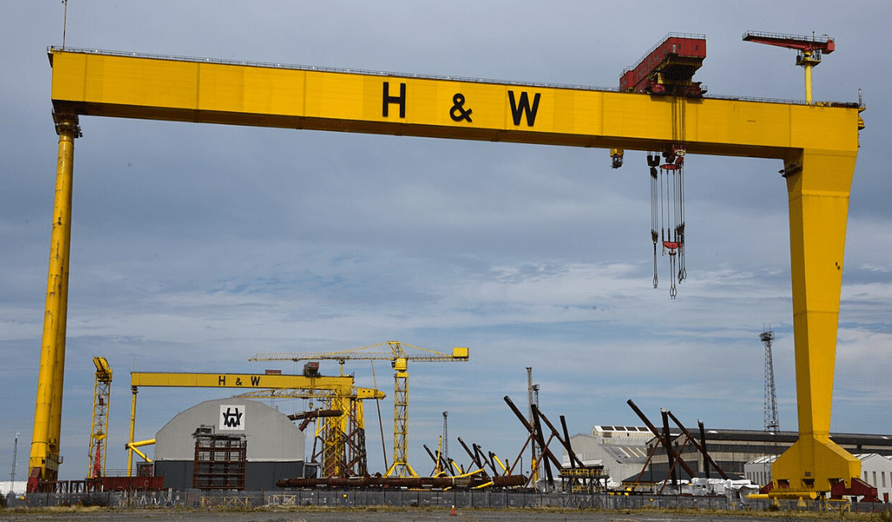
Facing severe global competition and financial struggles, Harland & Wolff was nationalized in 1977. In the early 2000s, the company shifted away from building full ships to focus on structural engineering, ship repair, and offshore energy. The unused land was redeveloped into Belfast’s Titanic Quarter.
The SS Nomadic is moored there. It was built in 1911 as a tender for the RMS Titanic and found in Paris, France, in 2002. It had been operating as a floating restaurant on the Seine before the Northern Ireland government purchased it and returned it to Belfast in 2006. It was turned into a museum ship in 2018. Fascinating history.
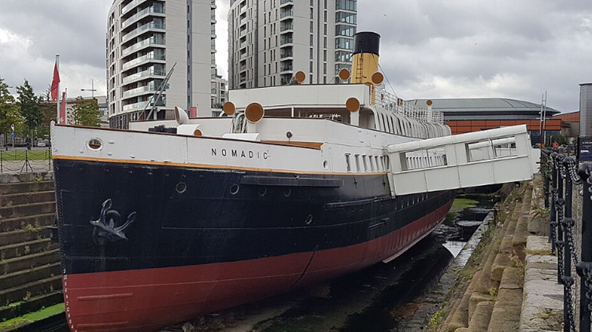
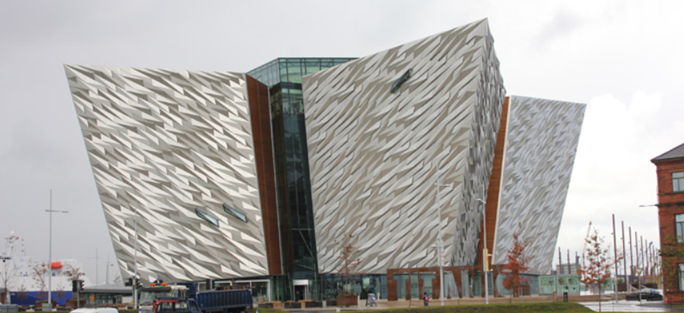
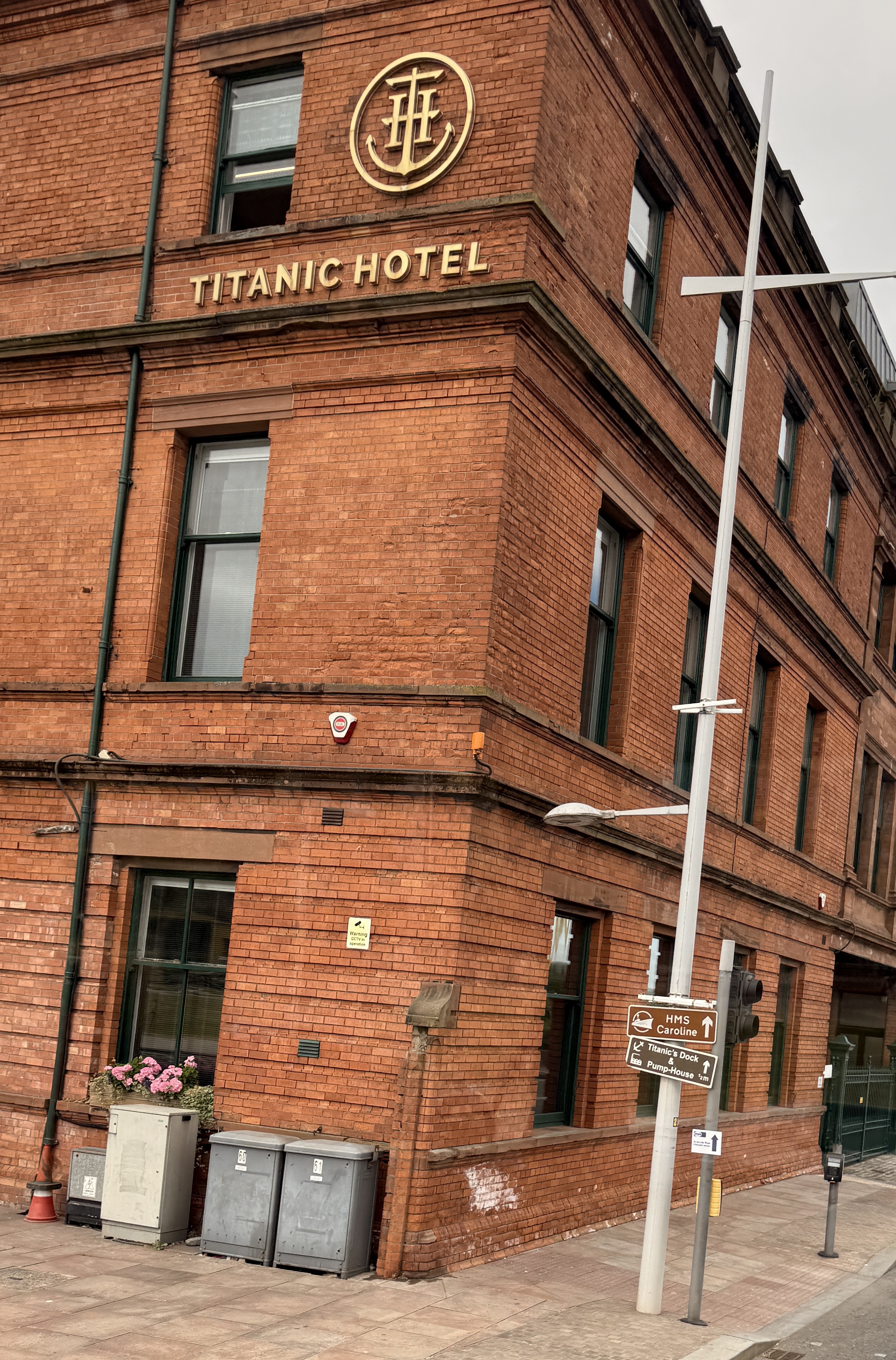
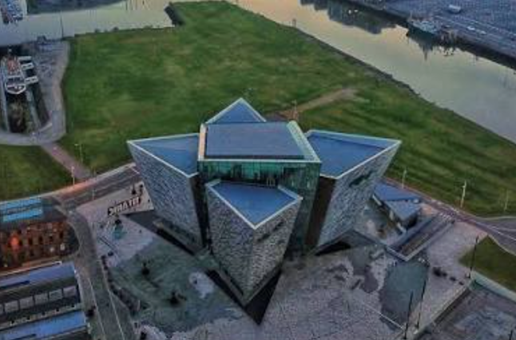
Here are a few pictures from the Titanic Quarter. The star-shaped Titanic Belfast is a world-class museum shaped like a star to replicate the White Star Line emblem. The Titanic Hotel Belfast occupies the restored, 19th-century headquarters of Harland & Wolff. It was here that the RMS Titanic and her sister ships were designed.
Back from dinner. Tonight we went to the fancy Italian restaurant where Shane wore his blazer and dress shirt with this black cargo pants and I wore my flowered dress. We didn’t take a photo but I’ll try to get one the next time. Shane had the lasagna bolonese starter and a filet and I had the carbonara starter and the prime rib. Very delicous. We skipped the dessert and went to the buffet to get gelato. Tonite was passion fruit and sacher torte for me and Shane got sacher torte and mango.
Tomorrow we are Ullapool, Scotland. Ullapool is a village and port located in the parish of Lochbroom in the county of Ross and Cromarty, Scottish Highlands. We have most of the day to check out the town and then we have a 1.5 hour planned tour to get some local history.
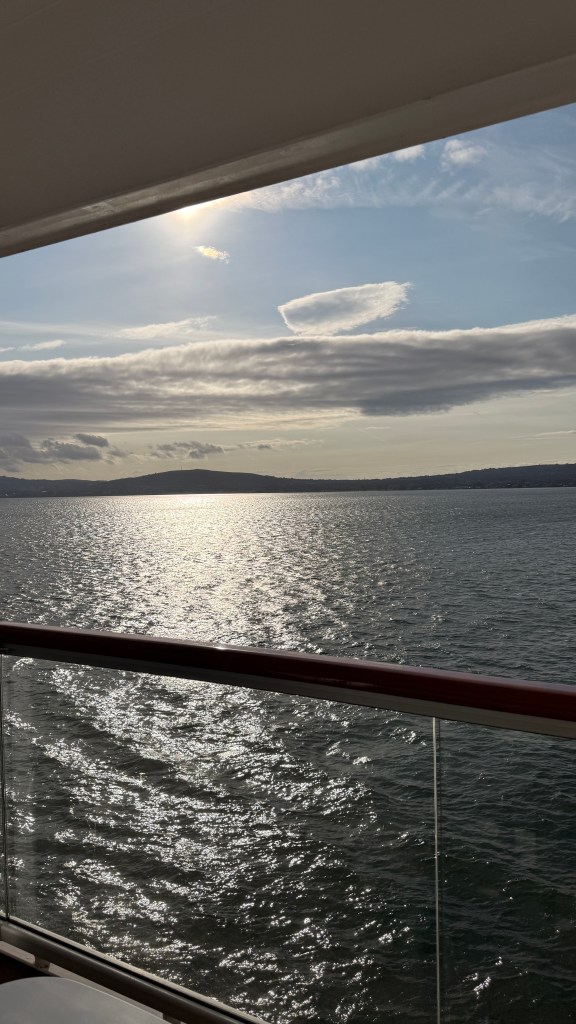
Here’s a gorgous shot from the balcony as we leave Belfast. This was around 7pm and now (9pm) it’s overcast so I’m glad I took this earlier to share with you.
Hope you all had a great day. Ours was amazing. Tracy


Leave a Reply